Plan the transport before the journey starts
A calmer trip is built from small preparations: a safe restraint, familiar equipment, a route with realistic stops, and a plan for heat, delay, illness, or escape.
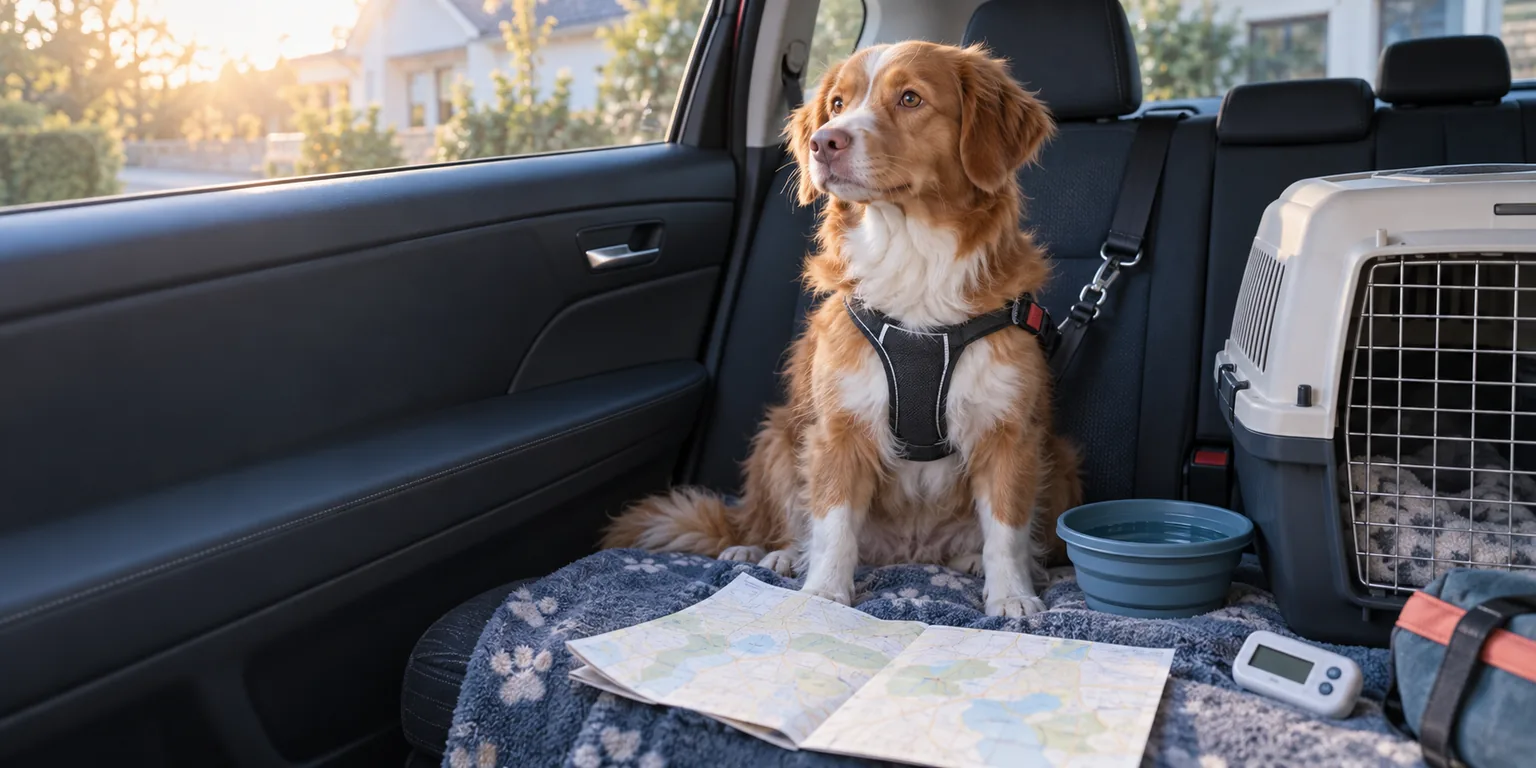
The transport check
| Before leaving | Confirm | Change the plan when |
|---|---|---|
| Carrier, harness, or restraint | Fit, ventilation, secure attachment, and the animal’s ability to settle. | The animal can escape, overheat, or cannot breathe comfortably. |
| Route and stops | Water, toilet or litter needs, shade, delays, and a safe destination. | Weather, traffic, or a stop would require leaving the animal unattended. |
| Documents and contacts | Identification, records, destination rules, and veterinary contact. | Entry, health, or transport requirements are unclear. |
Rehearse in short stages
- Leave the carrier open at home and pair it with calm, familiar experiences.
- Practise restraint and a short stationary vehicle session before a longer journey.
- Increase distance only when the animal recovers normally after the previous stage.
- Keep water, records, cleaning supplies, and a familiar item accessible.
Never leave an animal unattended in a vehicle when temperature or ventilation can become unsafe. If travel causes repeated distress, vomiting, collapse, or breathing difficulty, stop and seek veterinary guidance.
Match the trip to the animal
A carrier that is technically suitable may still be unfamiliar, too warm, unstable, or difficult to lift. Check the animal’s size, breathing, posture, stress signals, and ability to remain safely contained. A route that works for a calm adult animal may not work for a puppy, senior, brachycephalic animal, or one with a medical condition.
The delay plan
| Delay | Prepare | Do not improvise |
|---|---|---|
| Traffic or missed connection | Water, familiar food, cleaning supplies, and a contact who can adjust the arrival. | Do not release the animal in an unsafe area. |
| Heat or ventilation problem | A cooler route, shade, water, and a place to stop safely. | Never leave the animal alone in a hot vehicle. |
| Illness or distress | Records, veterinary contact, and a decision to stop. | Do not sedate or change medication without veterinary direction. |
After the journey
Record what worked: carrier, duration, temperature, stops, food, accidents, and recovery time. That record makes the next trip shorter to plan and shows when the journey needs veterinary advice rather than another experiment.
For a sitter or backup person, pair this page with the handoff rehearsal and keep the emergency kit accessible.
Define a successful arrival
The journey is not finished when the vehicle stops. Allow the animal to settle, offer the planned water or break, check breathing and behaviour, and record recovery time. Repeated distress is information for a veterinarian, not a reason to keep increasing distance without review.
Update the handoff sheet if another person repeats the route.
Keep the journey record
Record duration, weather, stops, behaviour, and recovery time. This shows whether the next trip can stay the same, should be shorter, or needs veterinary advice before another attempt.
Decide what makes a trip unsuitable
Before leaving, define the signs that cancel or shorten the journey: unsafe heat, repeated vomiting, breathing trouble, escape risk, or a destination that cannot receive the animal. A cancellation rule is part of transport planning; it is not an admission that the original plan was careless.
The same record helps decide whether another trip should use a different carrier, shorter stages, a cooler time of day, or veterinary input. Do not treat every difficult journey as a training problem.
Sources: AVMA transport and disaster planning and ASPCA pet preparedness.