Build a pet emergency kit that someone else can use
An emergency kit is not useful because it is large. It is useful when another person can find it, identify the animal, transport them safely, and access current records and instructions.
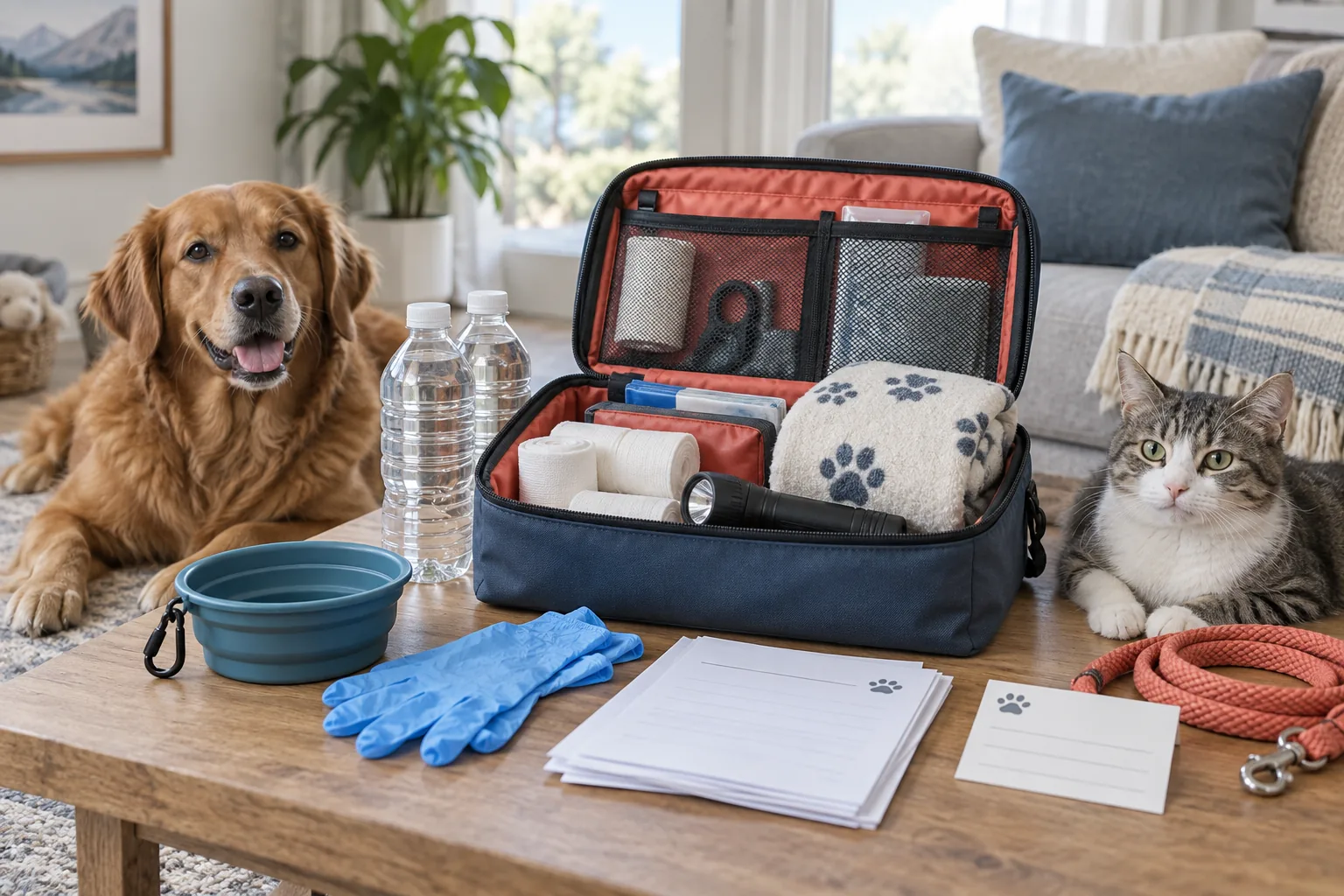
The kit inventory
| Group | Include | Refresh or verify |
|---|---|---|
| Food and water | Food your pet already eats, water, bowls, and an opener or scoop. | Expiry, rotation, amount, and storage conditions. |
| Identification and records | Microchip details, ID, photos, medical records, medication instructions, and contacts. | Phone numbers, addresses, treatment changes, and readable copies. |
| Transport and comfort | Carrier or crate, harness, leash, bedding, familiar food, sanitation supplies, and first-aid items chosen with veterinary advice. | Fit, access, condition, and whether the animal will enter the carrier. |
Practice the exit
- Bring animals indoors when a credible warning makes evacuation possible.
- Place the kit near an exit and identify one person who can collect the animal if you are absent.
- Check the carrier, route, destination, and backup destination before an emergency.
- Replace food, water, and medicines according to expiry and storage requirements.
Boundary: local authorities and shelters set the emergency instructions. Ask a veterinarian what first-aid items and medication information are appropriate; this page is not a substitute for veterinary advice.
Make the kit discoverable
Put the kit where a neighbour, sitter, or responder can find it without searching through cupboards. Keep a paper contact card with the animal’s name, identification, clinic, medicines, and your emergency contact. A phone-only plan fails when the phone is lost, locked, flat, or out of reach.
Run a quarterly five-minute check
- Open the kit and compare food, water, medication, and first-aid items with their dates.
- Check that the carrier, harness, leash, and labels still fit and work.
- Replace records after vaccinations, prescriptions, address changes, or microchip updates.
- Call or verify the proposed destination and its animal-acceptance rules.
- Ask the backup caregiver to locate the kit without help.
Plan for the animal who hides
Preparedness is not only inventory. Cats may hide, dogs may bolt, and a frightened animal may not accept unfamiliar handling. Practise closing the carrier, locating the animal, and moving through the exit during calm conditions. If that cannot be done safely, the plan needs a different person, equipment, or veterinary advice.
Use the handoff rehearsal to test whether another person can use the kit and the transport plan to test the route.
Make the kit pass a handoff test
Ask a person who does not live with the animal to find the kit, identify the carrier, read the contact card, and explain the first call. If they cannot, the issue is the location, labels, records, or decision chain.
Record the last check date and repeat after a prescription, move, new animal, or contact change.
Review after every change
A kit that was complete before a new prescription may not be complete afterward. Trigger a check after a move, adoption, clinic change, diet change, or medication change—not only on a fixed date.
Separate stay-home and evacuation needs
A large home supply and a small carry-out kit do not have to contain the same things. Mark what stays near the animal and what leaves through the door. This makes the plan faster during a warning and prevents the evacuation bag from becoming too heavy or disorganised to carry.
Write the refresh date on the outside of the kit and keep temperature-sensitive items according to their instructions. The kit should reduce decisions during an emergency, not introduce a new storage problem.
Sources: ASPCA disaster preparedness and AVMA pets and disasters.