Rehearse a pet-sitting handoff before you leave
A written handoff is useful only if another person can use it under pressure. The rehearsal is not a test of the sitter; it is a way to find missing instructions while there is still time to fix them.
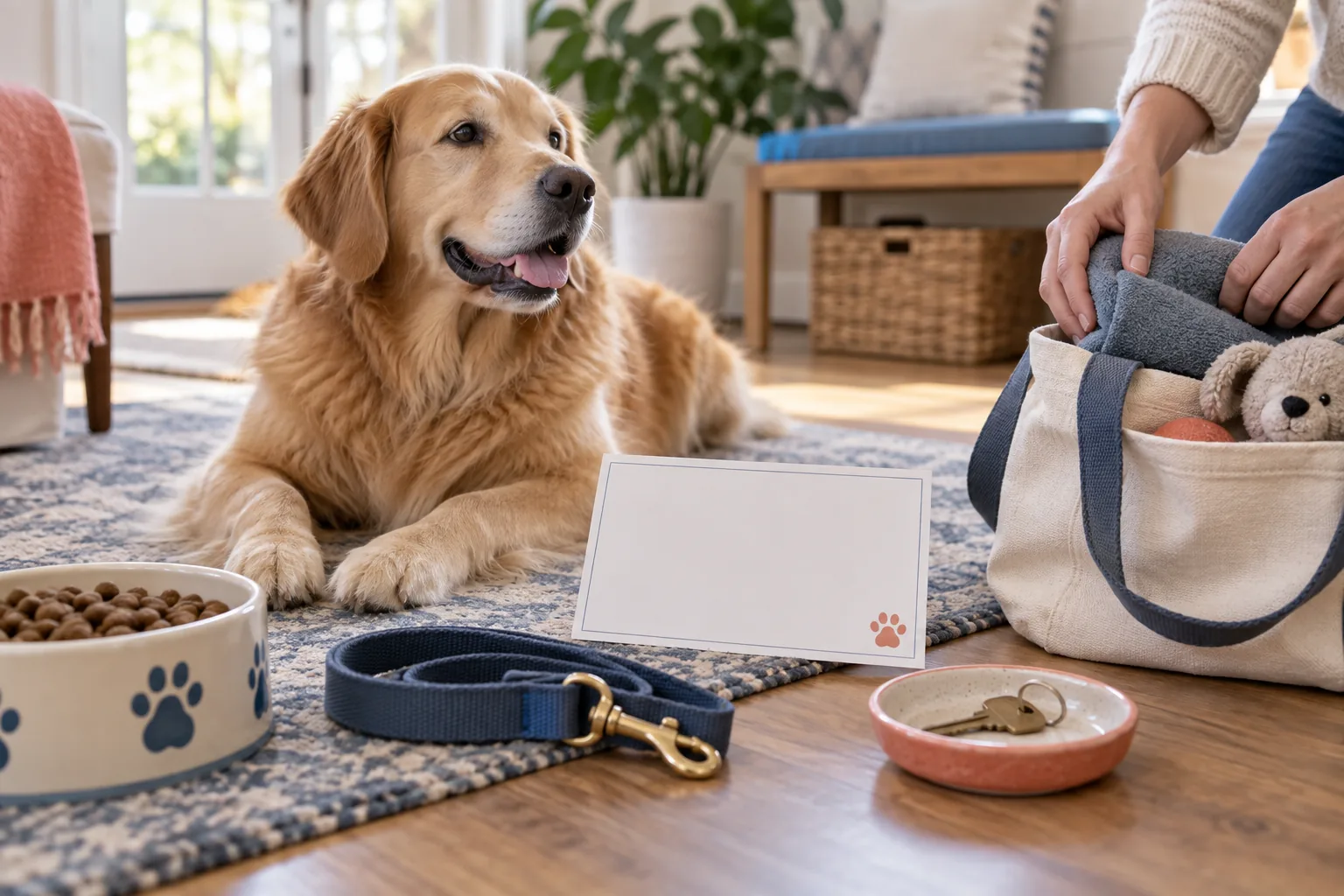
The ten-minute rehearsal
| Ask the sitter to find | Ask them to explain | Fix before departure |
|---|---|---|
| Food, water, litter or waste supplies, keys, carrier, and cleaning materials. | Where each item is and what “enough” means for the stay. | Missing labels, inaccessible supplies, or a replenishment gap. |
| Daily routine sheet. | Meals, walks, enclosure care, sleep, hiding places, and normal behavior. | Vague times, unclear portions, or instructions that depend on memory. |
| Medication and current records. | What is given, when, how it is recorded, and who is authorized to decide. | Unclear dosing, expired information, or medication without its label. |
| Veterinary and emergency contacts. | Who to call first, where to go, and what the owner can authorize. | Numbers not tested, no transport plan, or no backup decision-maker. |
Use an exception, not just the normal day
Walk through one scenario: the animal refuses food, escapes, vomits, is injured, a key is lost, or the sitter cannot reach you. Ask what they would do first, what they would record, and when they would call. Keep the answer specific to the animal and the local veterinary options.
Make the handoff easier to use
- Put emergency information on the first page or at the top of the phone note.
- Separate normal routine from exceptions so an urgent instruction is not buried.
- Use exact labels and current documents; never ask the sitter to infer a dose.
- Leave a paper or offline copy in case the phone, network, or message thread fails.
- After the stay, record every question the sitter had and revise the sheet.
Safety boundary: the sitter should contact the owner, veterinarian, emergency clinic, or relevant authority rather than diagnosing a concerning symptom. Breathing difficulty, collapse, serious injury, suspected poisoning, or rapid deterioration needs urgent veterinary guidance.
Use the sitter’s questions as evidence
Mark the exact confusion: portion size, key location, normal behaviour, medication log, or emergency authority. Rewrite that instruction, then ask the sitter to repeat it. The result is a shorter and more usable handoff.
Keep the revised sheet with the emergency kit and current medication record.
The success test
The rehearsal works when the caregiver can find the information, repeat the routine, and name the first call for an exception. It does not need to be perfect; it needs to reveal what remains implicit.
Make the final sheet shorter, not longer
After the rehearsal, remove instructions the sitter already understands and clarify only the points that caused hesitation. Put urgent information first, normal routine second, and background detail last. A caregiver under pressure needs a document that can be scanned quickly, not an autobiography of the animal.
Leave the final version where the sitter will actually look: beside the supplies, at the top of the offline note, or both. A perfect instruction in the wrong location is functionally missing.
Sources: ASPCA pet-sitter safety and AVMA emergency decision-maker guidance.