Make a pet medication handoff another person can follow
A medication instruction should answer what, how much, when, how, what was given, and who to call. If any of those answers depends on memory, the handoff is unfinished.
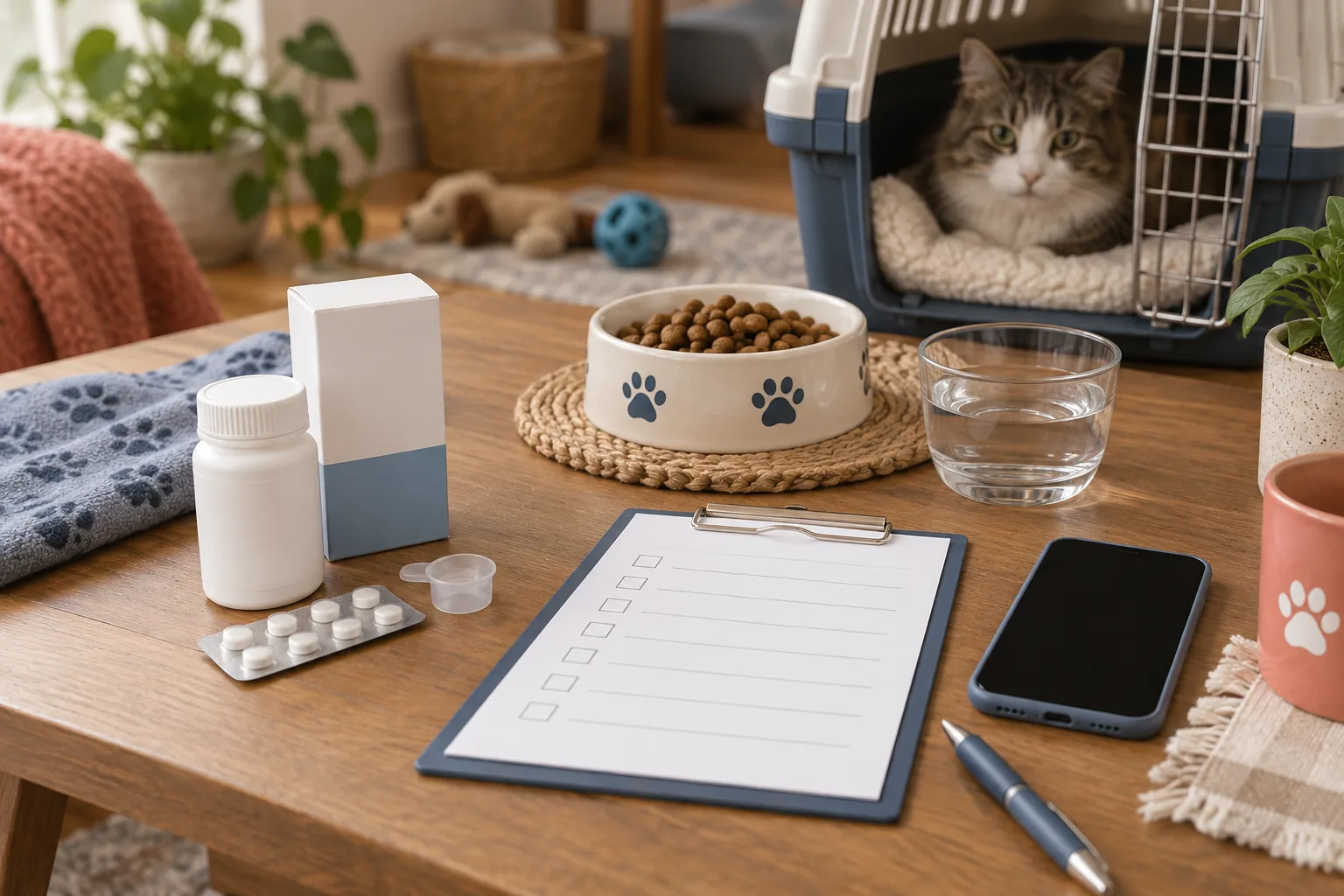
The medication card
| Field | Write down | Check before departure |
|---|---|---|
| Identity | Animal, medication name, formulation, prescription label, and prescribing clinic. | The container matches the current prescription and is in date. |
| Dose and timing | Amount, route, schedule, food instruction, and duration. | The caregiver can repeat the instruction without guessing. |
| Record and exception | A dose log, missed-dose instruction from the veterinarian, and contact route. | There is no improvised adjustment rule. |
Rehearse the handoff
- Show the original labelled container and the storage location.
- Ask the caregiver to explain the next dose and where it will be recorded.
- Practise the handling step only if the animal and caregiver can do it calmly.
- Agree who is authorised to contact the clinic and what information they will bring.
- Leave a paper copy offline and keep the veterinarian’s number visible.
Safety boundary: never change a dose, double a missed dose, crush a tablet, or substitute a human medicine unless the prescribing veterinarian gives that instruction. Seek urgent veterinary advice for a suspected overdose or serious reaction.
Separate the normal dose from the exception
The caregiver needs one clear line for the ordinary schedule and a separate instruction for a missed dose, refusal, vomiting, or suspected reaction. If the exception has not been defined by the prescribing clinic, the safe instruction is to contact the clinic rather than inventing a correction.
Watch the handoff, not only the medicine
- Ask the caregiver to find the labelled container.
- Ask them to repeat the next dose, route, and time.
- Have them point to the place where the dose will be recorded.
- Discuss handling: restraint, food, hiding, or a second person.
- Write the clinic number and the emergency route beside the log.
What a useful log contains
Record date, planned time, actual time, amount, initials, and any observation that changes the next call. A blank does not mean “probably given”; it means the record needs resolving before another dose is considered.
Connect the medication sheet to the handoff rehearsal and keep a copy in the emergency kit.
Define what “done” looks like
A completed handoff leaves no hidden calculation. Container, dose, route, time, record, storage, and clinic contact are visible. If the animal refuses, the sheet says who decides next rather than asking for improvisation.
Repeat after every prescription change and remove old instructions from the active sheet.
Review after every change
Remove the old sheet as soon as a prescription changes. An outdated instruction stored beside the current one creates an ambiguity the caregiver should never have to resolve alone.
Keep one active instruction
Use one clearly dated sheet for the current prescription and archive older instructions away from the active supplies. If the caregiver has to compare two versions, the handoff has already failed. The record should make the next safe action obvious without asking for a calculation.
Keep the active sheet beside the labelled container, not in a separate message thread. If the animal has several medicines, use one line per product and one record for each administration rather than a paragraph that invites mistakes.
Sources: AVMA emergency preparation and ASPCA pet preparedness.