Use a pet-boarding checklist before you hand over the carrier
A boarding decision is more than a reservation. Check whether the facility can meet this animal’s routine, health, handling, identification, and emergency needs, then make the handoff usable to someone who does not know your household.
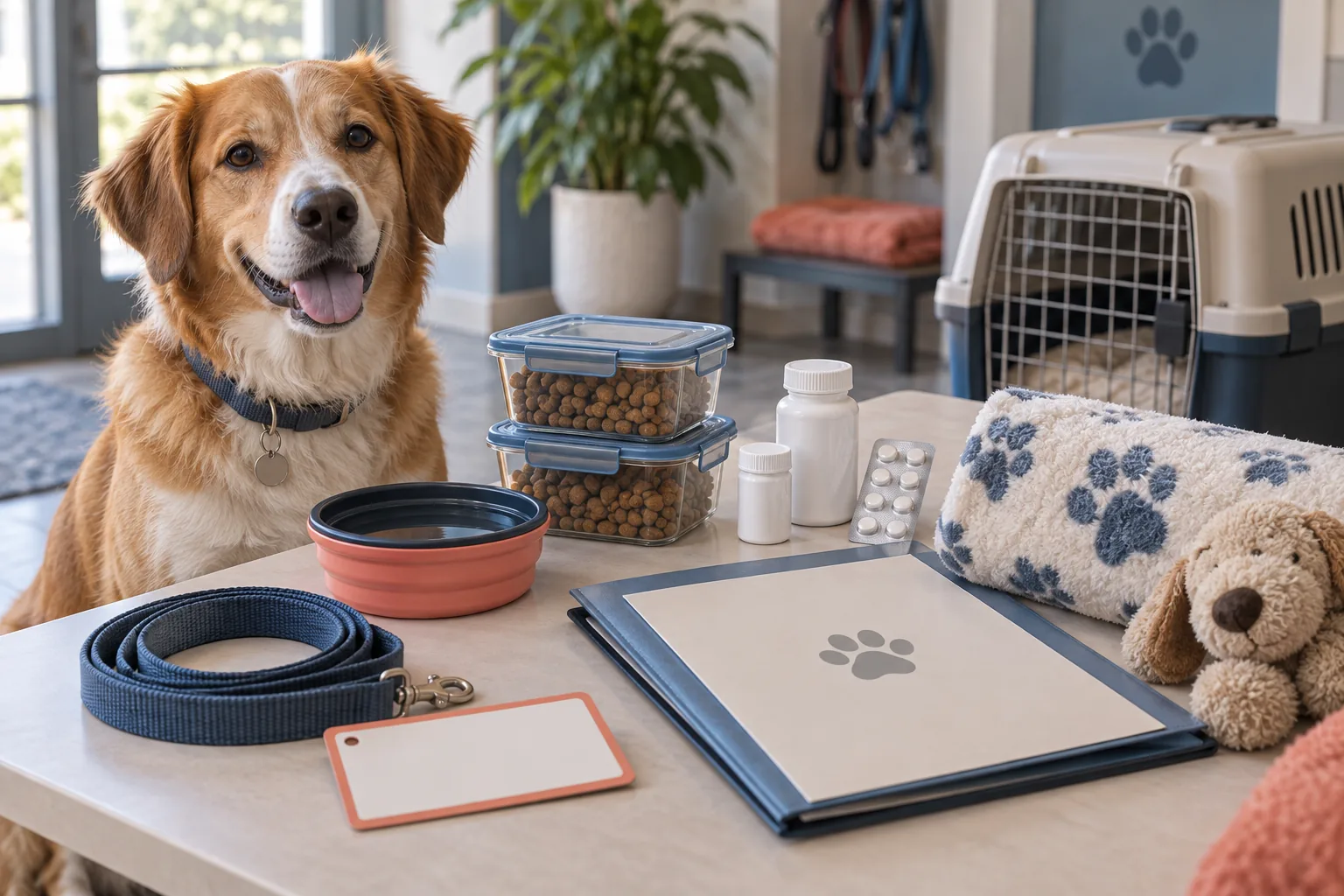
Ask before paying a deposit
| Topic | Question to ask | Record |
|---|---|---|
| Daily care | How are meals, water, exercise, rest, cleaning, and quiet time handled? | Routine, frequency, group or individual care, and what changes at night. |
| Staff and handling | Who supervises animals, what training is required, and how are animals separated? | Contact person, staffing pattern, handling and escape-prevention process. |
| Health | What vaccination, parasite, medication, and veterinary requirements apply? | Documents, deadlines, storage and administration rules. |
| Emergency | Who authorizes treatment, which clinic is used, and how will you be reached? | Named decision-maker, clinic, payment arrangement, backup contact. |
Build the handoff packet
- Write the normal routine with exact portions, timing, food restrictions, rest cues, and what normal behavior looks like.
- Attach current identification details, vaccination or other required records, veterinarian contact, medication labels, and a medication log.
- Write an exception plan: refusal to eat, vomiting, escape, injury, breathing trouble, or a missed dose. Say who is called first and what the facility may authorize.
- Pack familiar food and an identified comfort item if the facility allows it. Label every container with the animal’s name and instructions.
- Confirm drop-off and collection times, transport restraint, late pickup rules, belongings returned, and how updates are sent.
Example: a cat with daily medication
Do not rely on “the usual pill.” Provide the labelled medication, exact schedule, method the cat tolerates, a written log, and the veterinarian’s number. Ask the facility to explain what happens if a dose is refused or a container is damaged. If the answer depends on a guess, the packet is not ready.
Red flags
- No clear separation or escape-prevention plan.
- Staff cannot explain who makes an emergency decision.
- Medication instructions are accepted verbally but not recorded.
- Required records, cleaning, food storage, or overnight supervision are vague.
Boundary: vaccination, boarding suitability, medication, and emergency decisions are individual veterinary and facility matters. A boarding checklist is not a health clearance.
Rehearse the final handoff with the pet-sitting handoff guide and keep the emergency-kit guide available for transport or evacuation planning.
Keep a copy of the signed instructions and the facility’s contact details at home. On collection, ask what the animal ate, whether routine or behavior changed, which supplies remain, and whether any observation needs a veterinary follow-up. That short debrief closes the care loop instead of treating the reservation as the end of the record.
Sources: AVMA: arranging care while you are away and AVMA companion-animal care guidelines.