Plan a house move around your pet’s safest moments
Moving changes doors, smells, noise, travel, and routine at once. A pet plan reduces the number of decisions made during loading and unpacking: where the animal stays, who handles transport, which documents travel, and what signs mean the plan must pause.
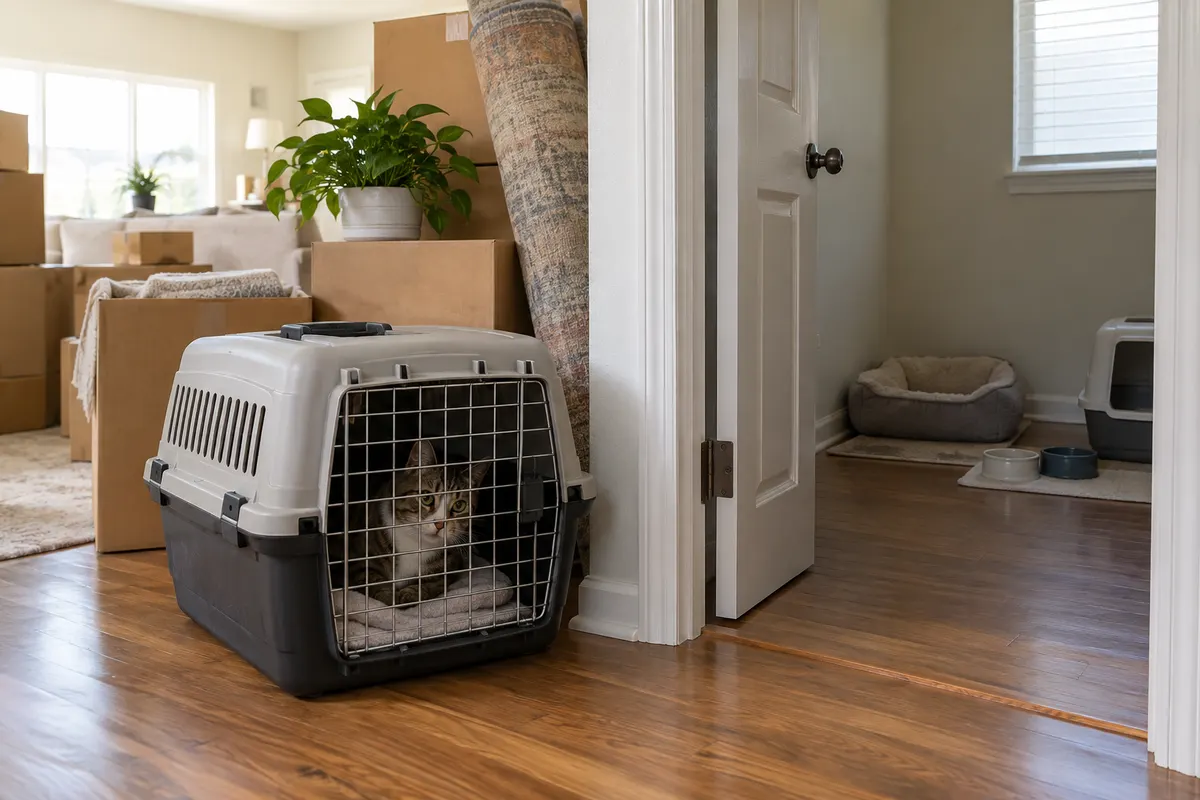
Safety boundary: keep pets away from open doors, vehicles, tools, toxic products, and unfamiliar animals. Never transport a loose animal in a moving vehicle. Ask a veterinarian about travel, medication, or severe fear before moving day.
Build the moving plan
| Stage | Decision | Record |
|---|---|---|
| Before loading | Choose a closed quiet room or trusted temporary caregiver. | Food, water, litter, carrier, leash, medication, and contact. |
| Transport | Use a secure carrier or restraint appropriate to the animal. | Route, stops, temperature, and emergency clinic. |
| Arrival | Set up one familiar base room before opening access. | Eating, toileting, hiding, vocalizing, and recovery. |
Six steps for the day
- Put identification on the animal and photograph current documents before doors open.
- Set up a closed room with a sign, water, food, bedding, and litter or toilet access.
- Tell every helper that the room is out of bounds and check the latch.
- Load the animal last or use a trusted caregiver, then confirm the carrier is secured.
- At arrival, establish the base room before moving the animal through an unfamiliar house.
- Offer familiar routine, observe quietly, and open more space only when recovery is clear.
Worked example: a cat moving across town
The cat spends loading time in a closed bathroom with a sign, then travels in a secured carrier with a familiar towel. The new home has food, water, litter, and a hiding box ready before arrival. The owner checks the microchip contact and keeps doors closed while furniture is carried. Hiding for a while is recorded; refusal to eat, breathing difficulty, repeated vomiting, or escape attempts changes the plan and prompts advice. A move can temporarily reduce appetite or increase hiding, so the record should include time, water intake, toileting, and whether the animal settles between interruptions.
Sources and next reading
Before the move, write down the animal’s normal food, toilet, sleep, and hiding pattern so a new-home change is easier to interpret. Keep the carrier accessible after arrival rather than packing it away immediately; it can remain a familiar safe place. The ASPCA moving guidance covers identification, safe confinement, transport, and gradual access to a new home. Use the transport plan for the vehicle-specific checklist.