Holiday pet safety: food, decorations, and visitors
Holiday hazards persist for weeks: food, plants, wires, candles, medicines, doors, and visitors all change the animal’s environment. Make a room-by-room plan.
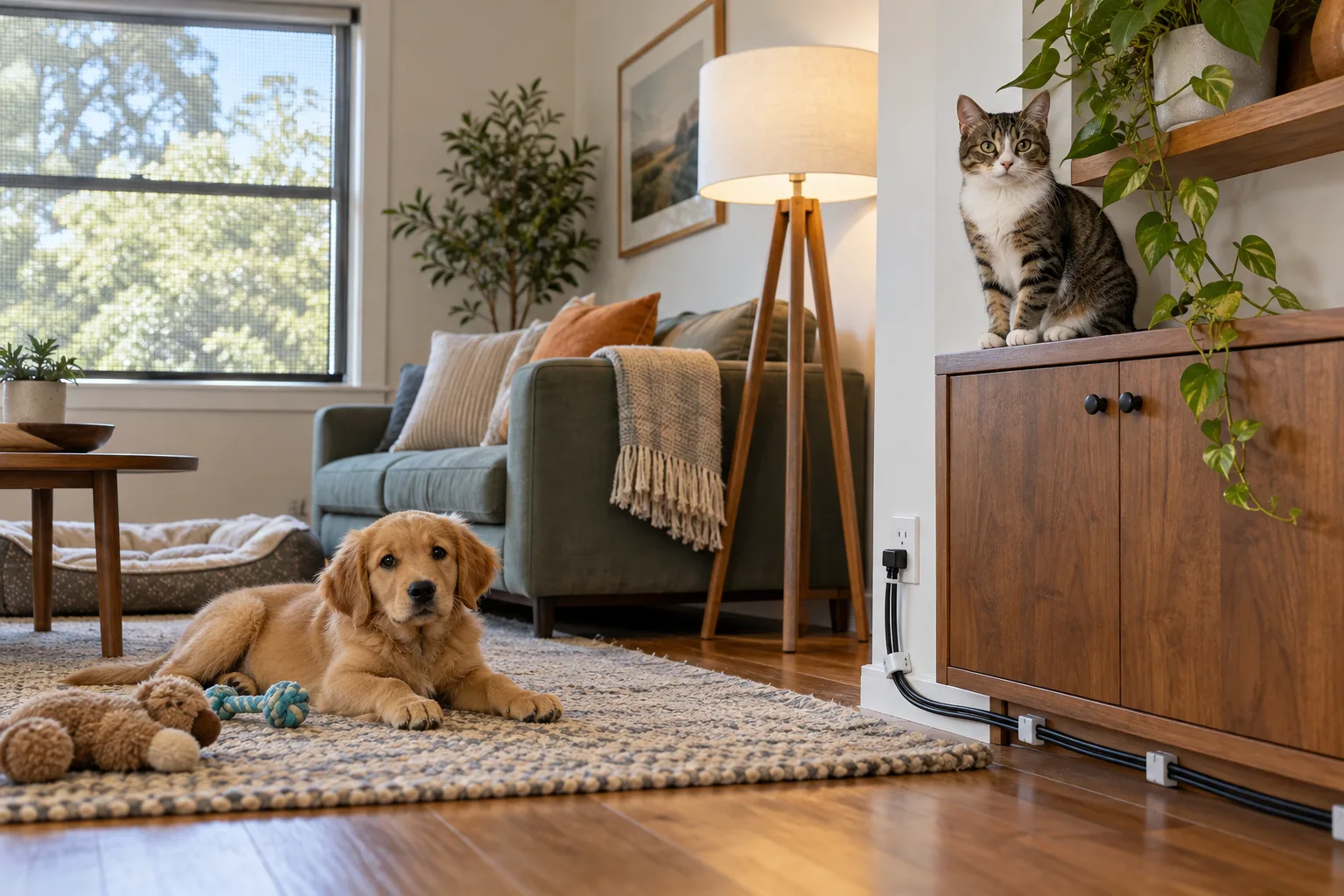
Boundary: Use this as a decision aid, not as a replacement for local advice, equipment instructions, or professional care.
Quick decision table
| Observation | Action | Review |
|---|---|---|
| Normal, dry, and accessible | Continue the routine and record the date | Check again in one week |
| Changing, damp, irritating, or hard to access | Reduce exposure and investigate the cause | Review after the next observation |
| Danger, contamination, severe damage, or rapid change | Stop and contact the relevant professional | Do not rely on this guide alone |
Procedure
- Write down the date, location, weather or room conditions, and what changed.
- Separate items that are sound from items that are damaged, wet, contaminated, or uncertain.
- Make one small intervention that preserves access and lets you observe the result.
- Record what happened rather than relying on memory. Repeat the check under similar conditions.
- Escalate when the boundary in the table is reached or the pattern worsens.
Worked example
A household finds a seasonal problem in one limited area. Instead of applying one fix everywhere, it labels the affected area, records the conditions, changes one variable, and checks the result on a dated note. That record makes the next decision more reliable and gives an extension service, technician, or veterinarian useful context if help is needed.
Make the record useful
Use the same small set of observations each time: condition, location, date, weather or indoor conditions, and the decision made. A useful record also says what was not done and why. If several people share the work, write the next check beside the first observation. Compare like with like and repeat an unclear observation before adding a second intervention.
Keep the note beside the crop, appliance, room, or animal supplies so the next check is easy to repeat. A dated record is especially useful when weather changes quickly or several people share care. Do not treat one successful check as proof that the risk has disappeared.
Limits and review trigger
This is a practical observation guide, not a substitute for local regulations, crop-specific advice, equipment instructions, or professional diagnosis. Review the page when an authoritative source changes, the season or climate changes, or the same warning appears twice despite the documented procedure.
Sources
Consult the relevant institutional guidance and adapt it to your location, species, crop, equipment, or building. Record the source and date when a recommendation matters.