How to audit a home for pet hazards
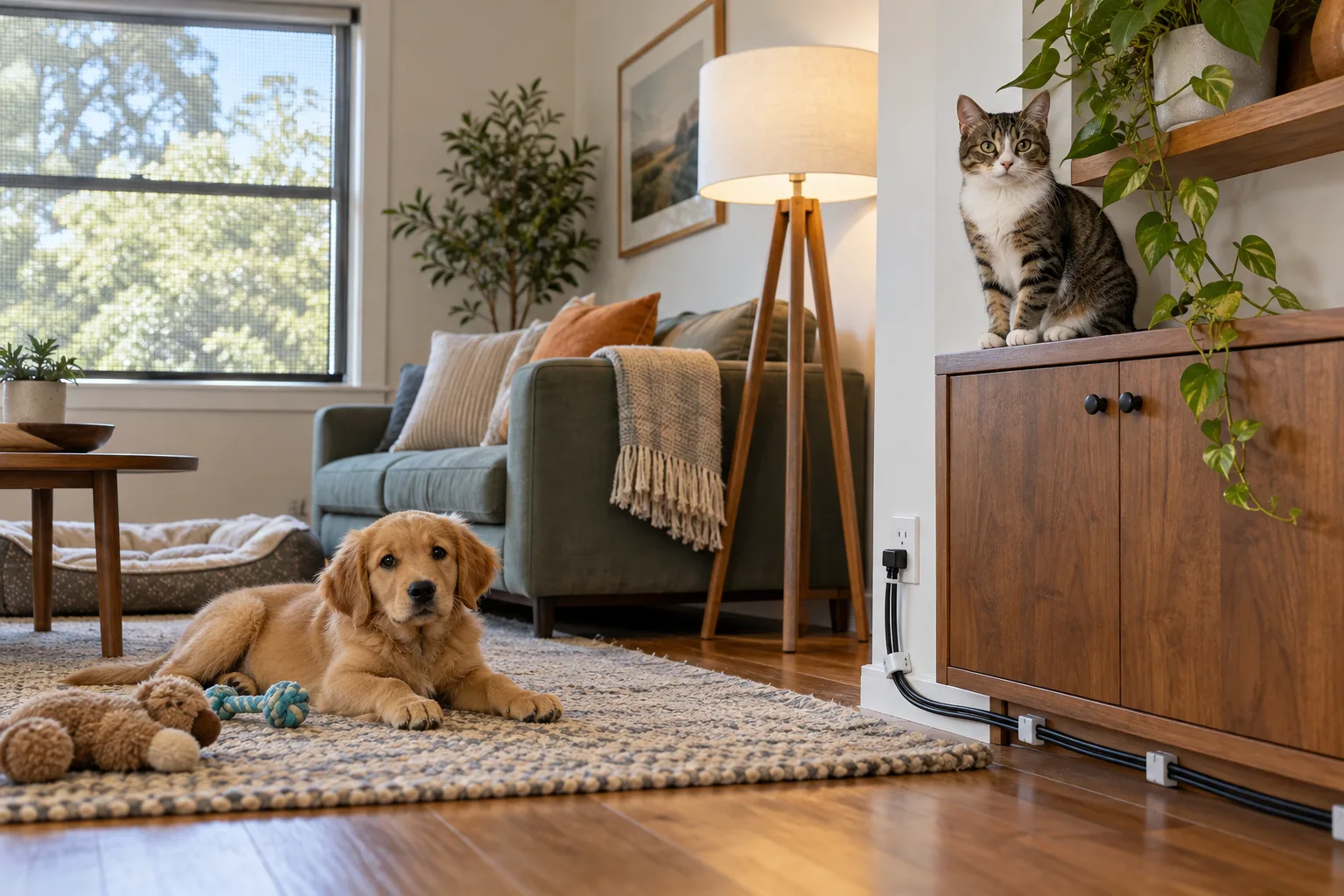
A pet-safe home is not created by buying one product. Walk each room at the animal’s eye level, identify what can be chewed, swallowed, tipped, trapped, or escaped through, and fix the highest-consequence hazards before giving the animal more access.
Emergency boundary: if an animal may have ingested a toxin, contacted a dangerous substance, or suffered an electrical injury, contact a veterinarian or the appropriate poison service immediately. Do not wait for symptoms or induce vomiting unless directed.
Audit by hazard
| Hazard | Check | Action |
|---|---|---|
| Cords and strings | Electrical cables, blind cords, yarn, ribbons and small toys. | Route, bind, remove, or supervise access. |
| Windows and exits | Screens, balconies, doors, gates and gaps behind appliances. | Secure the opening and create a closed-room plan. |
| Plants and products | Plants, cleaners, medicines, fertilizers, pest products and trash. | Identify, remove, lock away, and keep labels available. |
| Entrapment | Recliners, dryers, cabinets, toilets, vents and narrow gaps. | Close, block, check before use, and teach household members. |
The room-by-room pass
- Start with the room where the pet will spend unsupervised time and photograph hazards before moving them.
- Get cords off the floor, secure screens and doors, close cabinets, and remove accessible chemicals and medication.
- Check the kitchen, laundry, bathroom, garage, balcony, basement, and garden separately; risk changes with heat, tools and products.
- Set one safe room with water, bedding, toilet access, and no temporary moving or repair hazards.
- Write the action, owner, and date for every unresolved hazard. Do not rely on memory during a busy arrival.
Worked example: a curious kitten
The household binds blind cords, moves lilies out of the home, adds secure window screens, closes medication and cleaning cabinets, and checks the washer and dryer before every use. A string toy is used only with supervision and stored afterward. The audit is repeated after furniture changes because a new gap or exposed cable can create a new route.
What changes the response?
- Known ingestion: preserve the product label or photograph and call for professional advice.
- Electrical chewing: disconnect power only when safe and seek urgent veterinary guidance.
- Repeated escape attempts: secure the route, improve identification, and change access rather than punishing the animal.
- Home repairs: use a closed pet-safe room away from dust, tools, insulation, paint, and solvents.
Sources
The ASPCA home-preparation guidance covers plants, cords, cabinets, screens, and poison response. The ASPCA safety guidance also covers chemicals, tools, garden products, identification, and secure transport.