How to prepare pets for a winter power outage
A power outage changes heat, lighting, water access, food storage, medication, doors, alarms, and travel. Build a pet plan before the weather arrives: keep supplies together, know which temperature or health changes require action, and decide where the animal can go if the home becomes unsafe.
Emergency boundary: never use a generator, grill, camp stove, or fuel-burning heater indoors or near openings. Carbon monoxide is odorless. Move people and animals away and call emergency services if an alarm sounds or anyone feels ill.
Pack the animal-specific kit
| Need | Keep ready | Review |
|---|---|---|
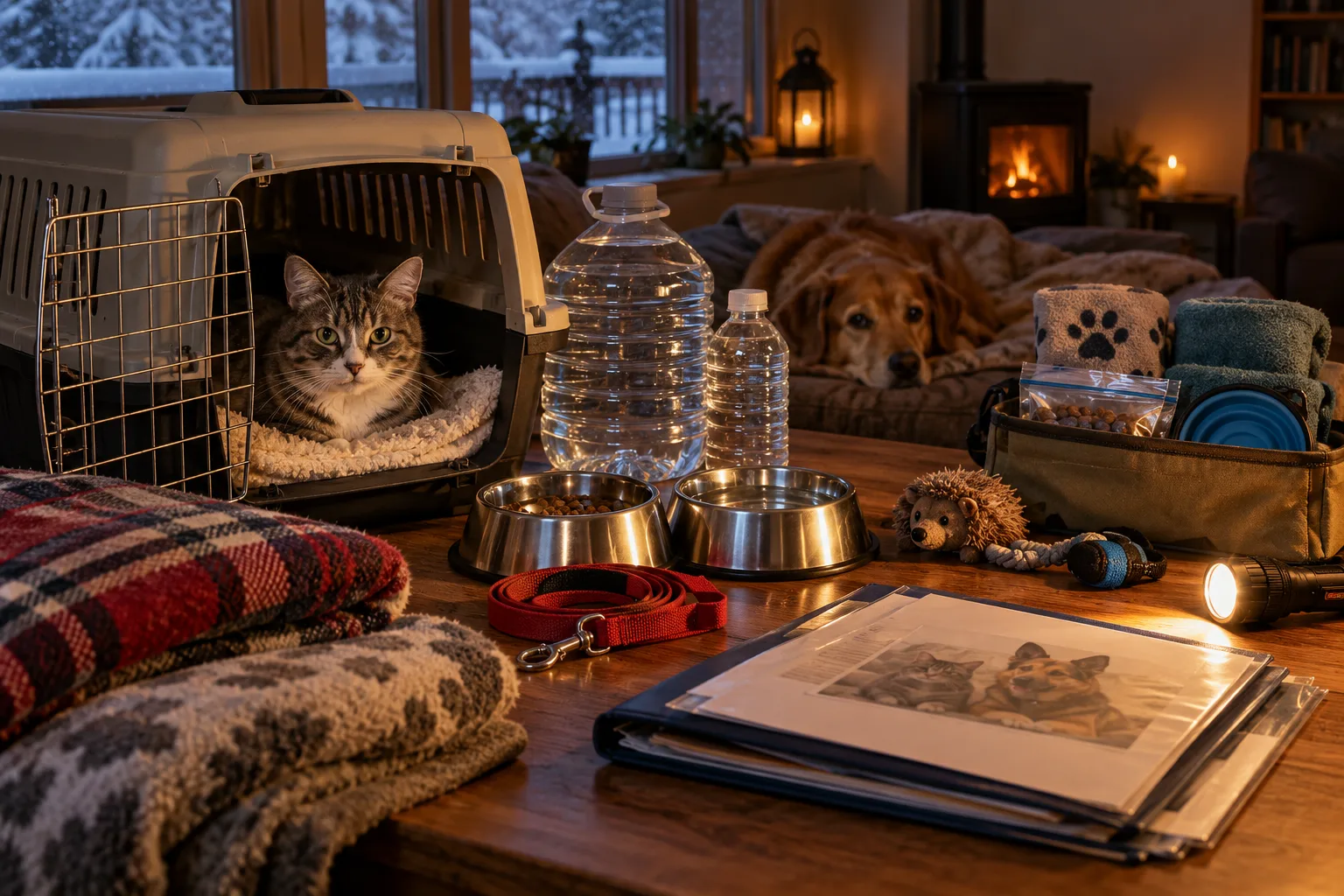
| Water and food | Several days of water, familiar food, bowls, and a can opener if needed | Expiry and rotation |
| Health | Medication, records, prescription, first-aid basics, and veterinary contact | Dose instructions and refill time |
| Movement | Carrier, leash, harness, ID, towel, litter or toilet supplies | Fit and animal tolerance |
Use a simple response sequence
- Check people first, then locate each animal without opening exterior doors unnecessarily.
- Move pets away from broken glass, candles, damaged appliances, cold drafts, and unfamiliar visitors.
- Protect water and food from freezing or contamination. Do not feed food that has warmed beyond safe storage guidance.
- Monitor the room, animal behavior, breathing, mobility, and access to water. A blanket is not a substitute for safe ambient temperature.
- Keep carriers and identification by the exit in case a shelter, hotel, friend, or veterinary facility becomes necessary.
- After power returns, inspect appliances, cords, heating equipment, and spoiled food before allowing normal access.
Worked example
A winter storm removes power overnight. The household keeps the cat in a carrier-ready room with water and litter, uses no flame or fuel indoors, and checks the dog’s paws and water during short outdoor trips. When the room becomes too cold for an elderly animal, the family follows its prearranged relocation plan rather than waiting for a visible crisis.
What requires help?
- Difficulty breathing, collapse, suspected toxin or electrical injury.
- Severe cold exposure, inability to warm, confusion, or persistent trembling.
- Medication that cannot be given safely or food and water that are unavailable.
- A damaged home, carbon-monoxide alarm, fire, or evacuation order.
Sources
The Ready.gov pet preparedness guidance covers records, carriers, food, water, and evacuation. The ASPCA also recommends a pet emergency kit and identification. Veterinary advice controls health decisions.
A written kit list is easier to use when the lights are out, especially if another person must locate food, records, medication, and the carrier.